
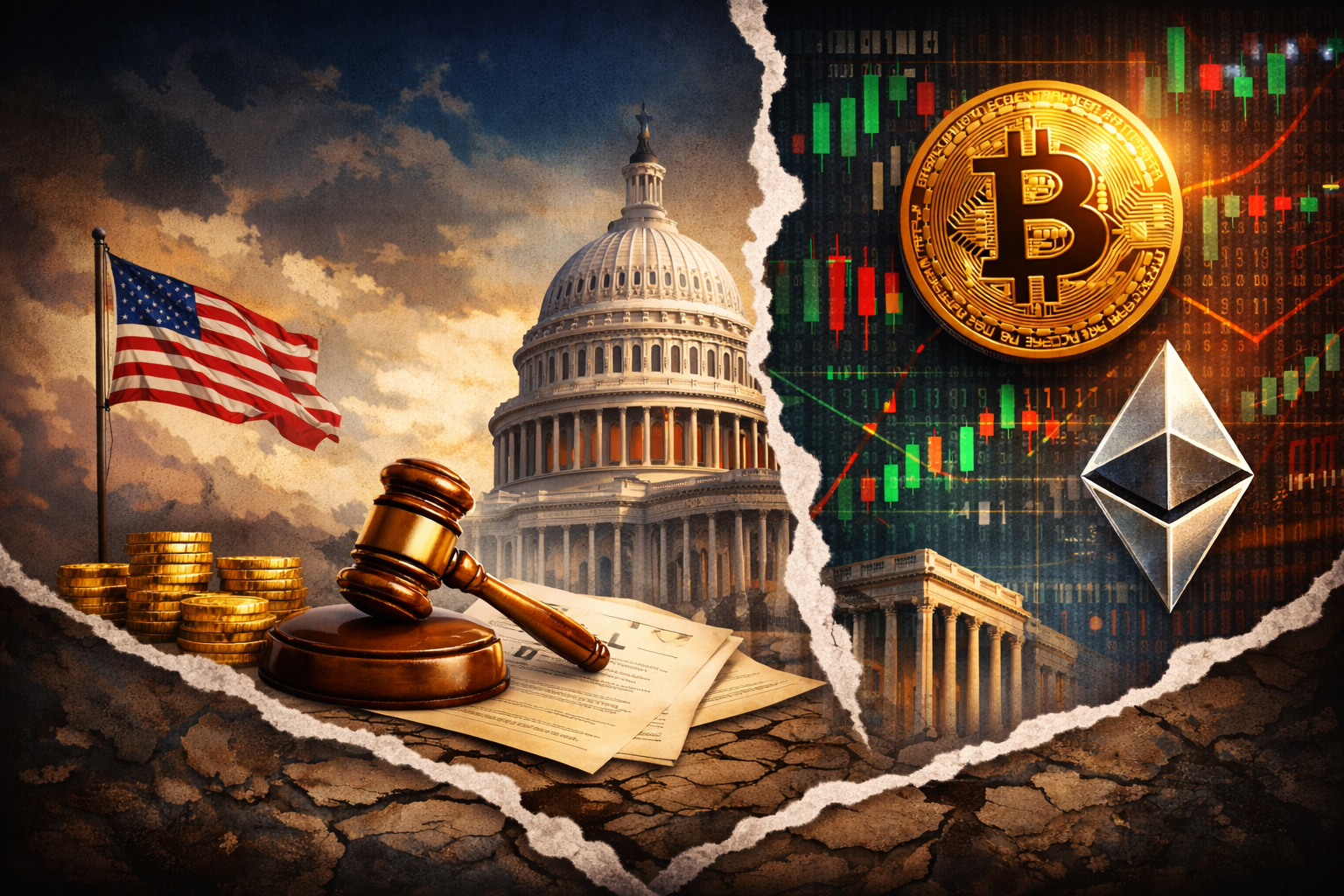
In a stunning turn of events that has sent shockwaves through the cryptocurrency world, Coinbase, one of the largest and most influential crypto exchanges in the U.S., has withdrawn its support for a key Senate bill aimed at regulating the digital asset industry. This decision, announced by CEO Brian Armstrong on January 14, 2026, led to the immediate postponement of a scheduled markup session by the Senate Banking Committee. The bill, known as the Digital Asset Market Clarity Act (or simply the Clarity Act), was poised to establish a long-awaited regulatory framework for cryptocurrencies. But with Coinbase pulling back, the legislation’s future hangs in the balance.
This isn’t just inside-baseball drama for policy wonks—it’s a pivotal moment that could shape the trajectory of crypto in America. Coinbase’s opposition highlights deep divisions within the industry and between crypto firms and traditional banking interests. In this article, we’ll dive into the background of the bill, Coinbase’s specific grievances, reactions from stakeholders, and the broader implications for investors, innovators, and the market at large.
The Road to the Clarity Act: A Brief History of Crypto Regulation Efforts
The U.S. has long lagged behind other nations in establishing clear rules for cryptocurrencies. While countries like the EU have implemented comprehensive frameworks like MiCA (Markets in Crypto-Assets), American regulators have relied on a patchwork of existing laws, often enforced through litigation by agencies like the Securities and Exchange Commission (SEC) and the Commodity Futures Trading Commission (CFTC). This ambiguity has stifled innovation, driven companies overseas, and left consumers vulnerable to scams and market volatility.
The Clarity Act, building on earlier House-passed legislation like FIT21 (Financial Innovation and Technology for the 21st Century Act), seeks to address these issues. Introduced in its Senate form in late 2025, the bill aims to:
- Define Asset Categories: Classify digital assets as securities, commodities, or other types, clarifying which regulator oversees what. For instance, decentralized tokens might fall under the CFTC, while more centralized ones could be SEC territory.
- Enhance Consumer Protections: Mandate disclosures, anti-money laundering (AML) measures, and safeguards against fraud.
- Promote Innovation: Provide a pathway for crypto firms to operate legally without the constant threat of enforcement actions.
The bill enjoyed broad bipartisan support initially, with Republicans like Senator Tim Scott (R-SC), chair of the Senate Banking Committee, championing it as a way to make the U.S. the “crypto capital of the world.” Democrats, including some on the committee, saw it as a balanced approach to reining in the “Wild West” of crypto while fostering growth. The legislation was set for a markup—a process where amendments are debated and voted on—on January 15, 2026, potentially paving the way for a full Senate vote.
But just hours before the session, everything changed.
Coinbase’s Bombshell: Why the Pullback?
Coinbase has been a vocal advocate for regulatory clarity, spending millions on lobbying and even launching the Stand With Crypto initiative to mobilize users. So, why the sudden reversal? In a post on X (formerly Twitter) on January 14, CEO Brian Armstrong laid out the company’s concerns, stating, “After reviewing the Senate Banking draft text over the last 48hrs, Coinbase unfortunately can’t support the bill as written. There are too many issues.”
Armstrong highlighted several “red flags” in the draft:
- De Facto Ban on Tokenized Equities: The bill’s language could effectively prohibit the tokenization of traditional securities like stocks or bonds on blockchain platforms. Tokenization—converting real-world assets into digital tokens—has been hailed as a game-changer for liquidity and accessibility in markets. Coinbase argues this provision would stifle innovation and limit the integration of blockchain with traditional finance. However, some tokenization firms have pushed back, claiming Coinbase is overstating the impact.
- DeFi Prohibitions and Privacy Concerns: Decentralized Finance (DeFi) protocols, which allow peer-to-peer lending, trading, and more without intermediaries, face new restrictions. Armstrong warned of “DeFi prohibitions” that could give the government “unlimited access to your financial” data, eroding user privacy. This echoes ongoing debates about balancing innovation with anti-money laundering requirements.
- Killing Rewards on Stablecoins: Perhaps the most contentious issue is the treatment of stablecoin yields. Stablecoins like USDC (co-issued by Coinbase and Circle) are pegged to fiat currencies and form the backbone of crypto trading. Coinbase offers rewards (similar to interest) on stablecoin holdings, generating significant revenue—$355 million in Q3 2025 alone. The bill, influenced by banking lobbies, would ban direct yields from issuers but allow third-party programs. Critics, including Armstrong, call this a “de facto ban” that protects banks from competition by preventing crypto from siphoning deposits. In interviews, Armstrong accused big banks of “regulatory capture” to “kill the competition.”
- Eroding CFTC Authority: The draft shifts more oversight to the SEC, which crypto advocates view as hostile under previous leadership. Armstrong argued this weakens the CFTC’s role in regulating commodities-like tokens, potentially leading to overregulation.
Armstrong emphasized that Coinbase opposed the bill “to protect consumers and competition,” insisting they’d “rather have no bill than a bad bill.” This stance came after Coinbase had initially signaled support but grew wary as last-minute amendments favored banking interests.
Reactions: A Divided Industry and Market Jitters
The fallout was swift. The Senate Banking Committee canceled the markup late on January 14, with Chair Tim Scott expressing disappointment but committing to revisions. Crypto stocks took a hit: Coinbase (COIN) shares fell about 5% on January 15, while Bitcoin and other assets gave back early-week gains amid regulatory uncertainty.
Industry voices are split. Some, like tokenization firms, reject Coinbase’s claims of a “ban” on equities, arguing the bill still allows innovation. Others praise Coinbase’s move as principled, preventing a flawed law from becoming entrenched. Crypto policy leaders scrambled to reaffirm support for the bill, viewing Coinbase’s reversal as potentially damaging to its passage.
Banking groups, meanwhile, defend the stablecoin provisions, warning that unrestricted yields could destabilize the financial system by drawing funds from insured deposits. This underscores a broader turf war: Crypto firms like Coinbase see banks as using influence to maintain dominance, while banks argue for a level playing field.
Even within government, there’s tension. The bill includes ethics provisions restricting senior officials, including President Trump, from profiting from crypto—adding another layer of controversy.
The Bigger Picture: What’s at Stake for Crypto?
This episode reveals the high stakes in crypto regulation. A well-crafted bill could unlock trillions in economic activity, create jobs, and position the U.S. as a global leader. But a “bad bill,” as Armstrong puts it, could drive innovation abroad, where countries like the UAE and Singapore offer friendlier environments.
Stablecoins are particularly critical. With over $150 billion in circulation, they enable fast, cheap cross-border payments and underpin DeFi. Banning rewards could slow adoption, hurting firms like Coinbase, which relies on this revenue stream. Tokenized equities and DeFi represent the next frontier, potentially democratizing access to investments and reducing costs.
For traders and investors on platforms like StalkerTrading, this uncertainty could mean short-term volatility. Bitcoin dipped below $60,000 following the news, and altcoins followed suit. Long-term, however, clarity—whatever form it takes—could stabilize markets and attract institutional capital.
Looking Ahead: Path to a Better Draft?
Despite the setback, there’s optimism. Senator Scott has pledged to incorporate feedback and reschedule the markup. Coinbase remains open to a revised version, and bipartisan momentum from prior successes—like the GENIUS Act for stablecoins in 2025—suggests progress is possible.
Crypto advocates are mobilizing. Stand With Crypto, backed by Coinbase, urges users to contact lawmakers for balanced legislation. As Armstrong noted in a CNBC interview, “Some things in the bill we were surprised by and had issues with.” The key now is negotiation: Can the industry, banks, and lawmakers bridge the gaps?
In the end, this drama underscores crypto’s maturation. No longer a fringe asset, it’s a political and economic force demanding thoughtful regulation. For the 52 million Americans holding crypto, the Clarity Act’s fate will determine whether the U.S. leads or lags in the digital economy. Stay tuned— the next chapter could redefine trading as we know it.