
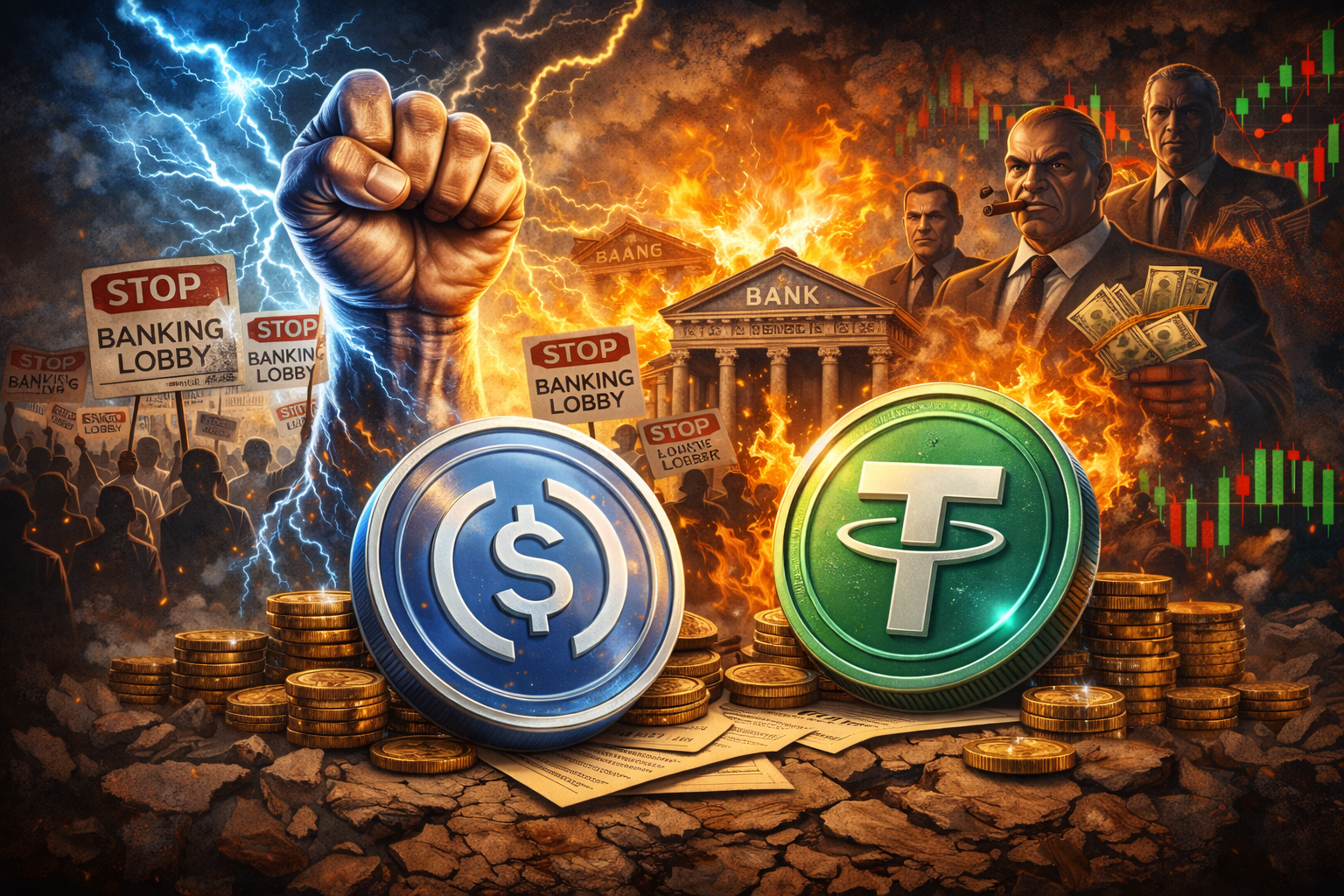
Stablecoins like USDC and USDT have become the backbone of crypto trading, payments, and even passive income strategies. With over $300 billion in circulation combined (as of early 2026), they offer a dollar-pegged safe haven in volatile markets. But one of their biggest appeals—earning yields or rewards simply by holding them—is now in the crosshairs of Washington regulators and the powerful banking lobby.
The drama exploded in mid-January 2026 when the Senate’s Digital Asset Market Clarity Act (Clarity Act) draft included provisions that could effectively restrict or ban passive yields on stablecoins. Coinbase CEO Brian Armstrong publicly withdrew support, calling it a “bad bill” worse than the status quo, and the Senate Banking Committee postponed its markup session. This isn’t just policy wonkery—it’s a battle over whether crypto can compete with traditional banks on interest-bearing “deposits.”
Here’s the breakdown: why yields are under fire, how the rules have evolved, what it means for major stablecoins, and the real-world impact on everyday traders and holders.
The Evolution of Stablecoin Yields: From GENIUS Act to Current Drama
Last summer (2025), Congress passed the GENIUS Act (Guiding and Establishing National Innovation for U.S. Stablecoins), a major win for the industry. It created a federal framework for payment stablecoins, requiring 1:1 reserves in high-quality liquid assets and banning issuers (like Circle for USDC) from paying direct interest or yield to holders. The goal? Prevent stablecoins from functioning like unregulated bank deposits and avoid risks to financial stability.
But here’s the loophole banks hate: The GENIUS Act didn’t explicitly stop affiliated platforms or exchanges (like Coinbase) from offering rewards or yields on stablecoin holdings. Coinbase, which partners with Circle and shares revenue from USDC reserves, has offered rewards funded from its own pocket—often around 4-4.7% APY for eligible users (higher for Coinbase One members, lower or zero for others depending on region and changes). This has been a huge revenue driver: Coinbase reported hundreds of millions in stablecoin-related income in 2025 alone.
Banks, through groups like the American Bankers Association and Bank Policy Institute, argue this creates unfair competition. They warn that yield-bearing stablecoins could trigger massive deposit flight—potentially trillions—from traditional savings accounts (which often pay near-zero interest) into crypto. That flight hurts banks’ ability to lend to households, small businesses, and the broader economy.
The Banking Lobby’s Push: Closing the “Loophole”
In the latest Clarity Act draft (released around January 12, 2026), banking influence showed up in proposed language that would bar digital asset service providers (exchanges, platforms) from paying passive yields or rewards simply for holding stablecoins. It draws a line between “passive” holding (banned) and activity-based rewards (like staking or liquidity provision, potentially still allowed with restrictions).
Armstrong blasted this as “killing rewards on stablecoins” and accused banks of regulatory capture to protect their dominance. He argued it would entrench big banks while stifling innovation in crypto-native payments and DeFi. The provision was a key reason Coinbase pulled support, leading to the markup delay on January 15.
Banks counter that unrestricted yields threaten systemic stability. If stablecoins pay 4-5%+ (backed by Treasury yields) while bank savings accounts lag, why keep money in FDIC-insured deposits? The lobby has pushed hard for amendments to close any remaining loopholes.
Impact on Major Stablecoins: USDC vs. USDT
- USDC (Circle/Coinbase): This is ground zero. Coinbase’s rewards program (currently ~4-4.7% APY in many cases, varying by account type and region) relies on this model. A ban could slash user incentives to hold USDC on Coinbase, reducing revenue and potentially shifting holdings elsewhere. USDC emphasizes transparency and regulation, so tighter rules might hurt less long-term—but short-term, it disrupts the yield appeal that draws retail and institutional users.
- USDT (Tether): Tether dominates by market cap (~$140B+ range) and trading volume, but it doesn’t offer built-in yields like Coinbase does for USDC. Tether focuses on liquidity and global access rather than rewards. A broader restriction might affect third-party platforms offering USDT yields (e.g., in DeFi), but Tether itself is less exposed. Still, if yields dry up industry-wide, it could slow adoption for passive income seekers.
Both stablecoins saw massive growth in 2025 (transactions hit records, market cap up significantly), but yields have been a key adoption hook.
What This Means for Retail Traders and Holders
For everyday users on platforms like exchanges or wallets:
- Passive Income at Risk: If the ban sticks, that easy 4-5% APY on holdings could vanish or move to more restricted/complex forms (e.g., only through active DeFi participation). Many retail traders park funds in stablecoins between trades or during bear markets—losing yields means lower returns and less incentive to hold onchain.
- Alternatives and Workarounds: DeFi lending protocols (Aave, Compound) or staking/liquidity provision could still offer yields (often higher, but riskier). Offshore or non-U.S. platforms might fill the gap, but that brings compliance headaches. Some predict banks will launch their own yield-bearing tokenized deposits under GENIUS rules.
- Market Volatility: Uncertainty already contributes to choppy crypto sentiment. A “bad bill” passing could push more activity abroad; a pro-crypto revision could boost confidence and inflows.
- Long-Term Outlook: This fight highlights crypto’s maturation—stablecoins aren’t just trading tools anymore; they’re challenging traditional finance. A compromise (e.g., allowing activity-based yields) might emerge in revisions, with bipartisan talks ongoing. But until clarity arrives, expect more lobbying battles.
The Clarity Act remains stalled, with potential rewrites ahead. For now, the banking lobby has scored points, but crypto advocates (led by Coinbase) are fighting back hard. If yields get restricted, it could reshape how millions use stablecoins—not as “digital cash” with perks, but as pure utility.
Traders: Monitor Senate updates closely. In the meantime, diversify your stablecoin strategies—whether through DeFi or other platforms—because the yield game might be changing fast.