In trading software, features are usually treated as checkboxes. More indicators. More modes. More knobs to turn. Somewhere along the way, sandbox mode often gets lumped into that same category, a nice-to-have sitting quietly near the bottom of a list.
That framing misses the point.
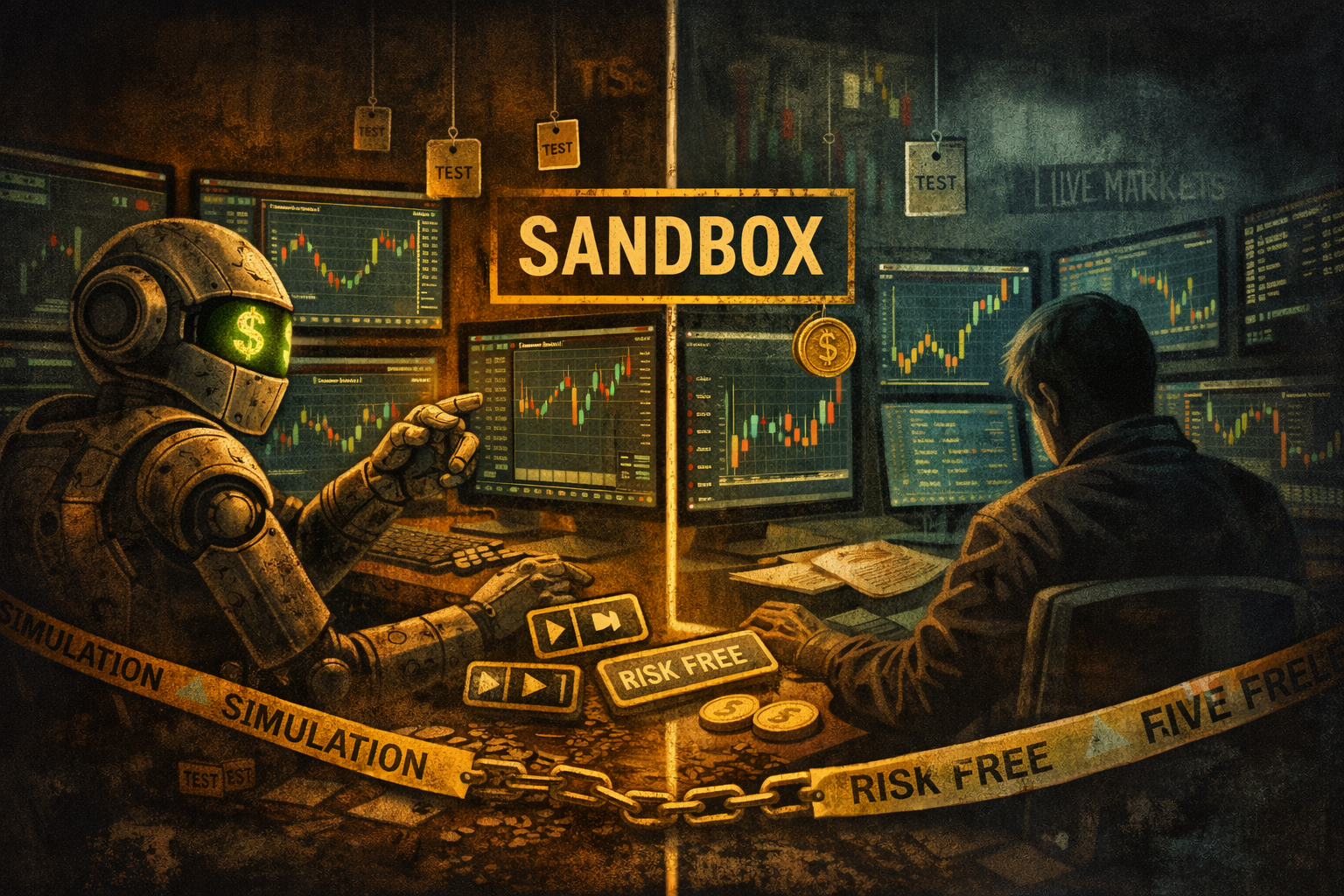
Sandbox mode isn’t just another feature. It fundamentally changes how people interact with a trading system, how they learn it, and whether they trust it enough to use it when real money is involved.
Most traders don’t fail because they lack information. They fail because they’re forced to make decisions before they understand the consequences of those decisions. Real markets don’t wait for clarity, and live trading environments don’t forgive experimentation. The cost of learning is immediate and financial.
That pressure shapes behavior in subtle ways. People simplify strategies prematurely. They avoid changing parameters once capital is deployed. They confuse familiarity with understanding. Over time, the system becomes something they “hope” works rather than something they actually know.
Sandbox mode removes that pressure.
When the outcome no longer affects capital, the relationship with the software changes. Curiosity replaces caution. People test extremes instead of safe defaults. They observe behavior instead of reacting to it. They start asking better questions, not just about what the bot did, but why it did it.
That shift matters more than most performance metrics.
A sandbox environment exposes edge cases that would otherwise remain hidden until they’re expensive. It reveals how strategies behave during drawdowns, during chop, during conditions where nothing obvious is happening. It makes failure informative instead of punitive.
This is where many tools quietly fall short. They offer automation, but only in live conditions. Learning is inseparable from risk. As a result, users either overtrust the system too quickly or never fully trust it at all. Both outcomes lead to the same place: abandonment.
Good sandbox design slows that cycle down.
It creates space for iteration. It allows users to build intuition without anchoring decisions to recent wins or losses. It turns configuration from a stressful commitment into a reversible experiment. Over time, confidence becomes grounded in observation rather than hope.
There’s also a less obvious effect. Sandbox mode filters users.
People willing to spend time testing without immediate payoff tend to be more patient, more systematic, and more realistic about what automation can and cannot do. Those are exactly the users who benefit most from trading software in the long run. A proper sandbox doesn’t just educate, it attracts the right audience.
From a product perspective, that’s a competitive advantage.
Most trading tools compete on speed, signals, or promised outcomes. Sandbox mode competes on understanding. It signals that the product is meant to be learned, not blindly trusted. That it’s built for people who value process over excitement.
In markets defined by uncertainty, that signal carries weight.
Automation doesn’t remove responsibility. It changes where responsibility lives. Sandbox mode makes that transition explicit. It gives users the chance to earn confidence before they’re asked to risk anything meaningful.
That’s not a feature. That’s a philosophy.
And in a space where most tools rush people toward live capital as quickly as possible, slowing them down might be the most competitive move you can make.