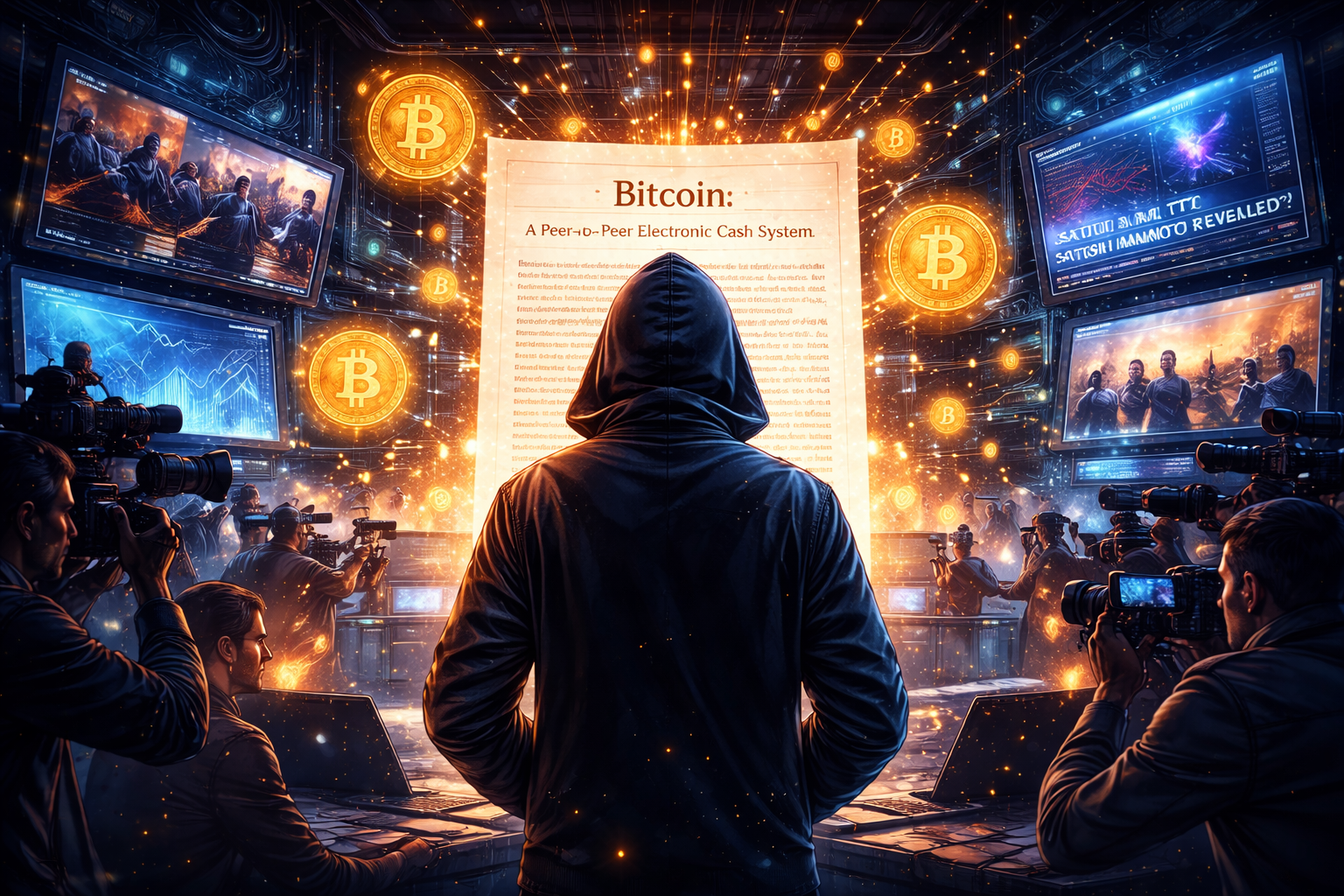
For years, the greatest unsolved question in technology and finance has been: who is Satoshi Nakamoto? The anonymous creator of Bitcoin built something that challenged traditional currency, reshaped financial autonomy, and inspired a global ecosystem of blockchain innovation. The world has largely accepted Satoshi’s anonymity as part of the story, but imagining the day their identity is revealed raises another question entirely: what would happen if the world finally knew?
If the true identity of Satoshi Nakamoto were uncovered tomorrow, every market on earth would respond instantly. Bitcoin’s value, which has long been tied to its decentralized ethos and unknowable origin, could swing wildly. Some investors might assign even greater legitimacy to the network, while others could see the reveal as a vulnerability, a human whose motives can now be questioned, analyzed, and politicized. Central banks and governments would pounce, demanding answers about intent, influence, and potential legal recourse. The mythology that helped Bitcoin grow would be replaced by scrutiny, criticism, and endless debate.
There is also a geopolitical dimension to consider. The person or group behind Bitcoin would become world news overnight. Not because of theoretical wealth — although the Satoshi wallets hold vast sums of Bitcoin — but because influence follows identity. A single statement could ripple through markets, technology forums, and national policy debates. The aura of mystery that shields Bitcoin from having a central authority is a feature, not a flaw. Remove that anonymity, and you remove a part of what makes Bitcoin a truly decentralized system.
The enigmatic absence of a known founder has also created a vacuum that many have tried to fill. Ever since Bitcoin entered the public consciousness, countless individuals have stepped forward claiming to be its creator. Some are driven by ambition, some by ego, and others by pure opportunism. A number of these claims are nothing more than self-promotional stunts, attempts to leverage the mystique of Satoshi for attention. Among these, one of the most notorious examples is Craig Wright.
Craig Wright has repeatedly asserted that he is Satoshi Nakamoto, but his claims have been thoroughly discredited by the wider crypto community and challenged legally. Experts, developers, and early Bitcoin participants have examined his assertions and found that he has never provided the definitive cryptographic proof required to verify such a claim. Instead, what emerged were questionable documents, contradictory statements, and behavior that many interpreted as deceptive. Court rulings and public analysis have repeatedly exposed inconsistencies in his narrative, and significant portions of the industry now regard his claims as fraudulent. He has become emblematic of the wave of impostors and false claimants — a cautionary example of why the identity of Bitcoin’s creator remains unverified.
These fraudulent claims highlight a deeper truth about the crypto world: anonymity is not just a quirk, it’s a protective and stabilizing feature. Revealing the true Satoshi would invite a flood of agendas, lawsuits, regulatory scrutiny, and relentless media pressure. It would transform an open-source protocol into something tethered to an individual, with all of the complications that come with personal identity — biases, accountability, and politics.
If the real Satoshi Nakamoto exists and is watching from a distance today, the cacophony of impostors, litigators, and opportunists might be precisely why they have stayed silent. The moment their name is tied to the Bitcoin network, they stop being a concept and become a target. Governments would seek control, detractors would seek criticism, and the markets would react not just to code and adoption, but to a human personality with flaws, beliefs, and motives.
Perhaps the most compelling reason Satoshi has remained anonymous is not secrecy, but necessity. Bitcoin’s power comes from its facelessness. It is a protocol that cannot be sued, cannot be arrested, and cannot be coerced. It does not bow to politics or nationality. The anonymity of its creator has become an essential part of its resilience.
So what happens if the world discovers who Satoshi Nakamoto really is? Everything changes. And that may be precisely why it never should.